Principal · Veda
Vidwan Shri Shringeri Sudhakar Bhat
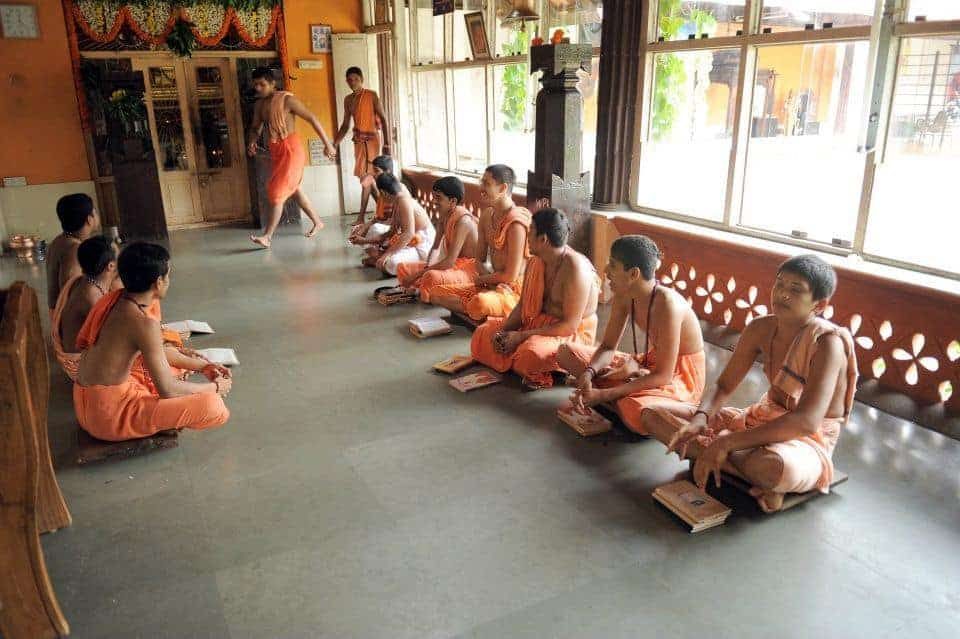
Teaches the Vedas, learnt by heart with exact pronunciation and intonation (svara), passed from teacher to student by recitation. He has also written more than 50 textbooks for the Pathashala.
A Veda Pathashala of Shree Kashi Math Samsthan, Varanasi
Free Vedic education in the Gurukula way, in Mangalore, under the direct supervision of H.H Swamijis of Shree Kashi Math Samsthan.
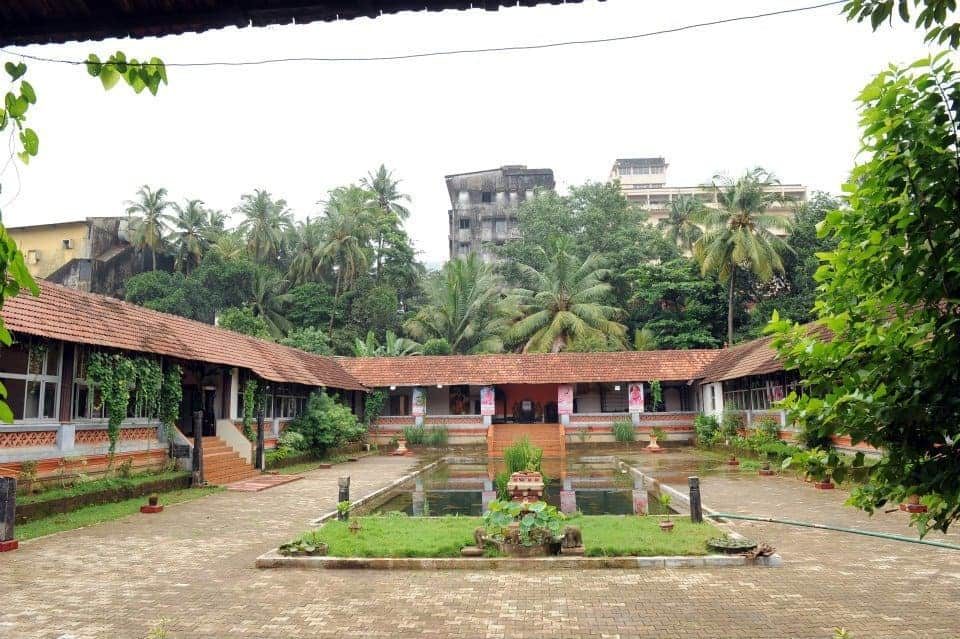
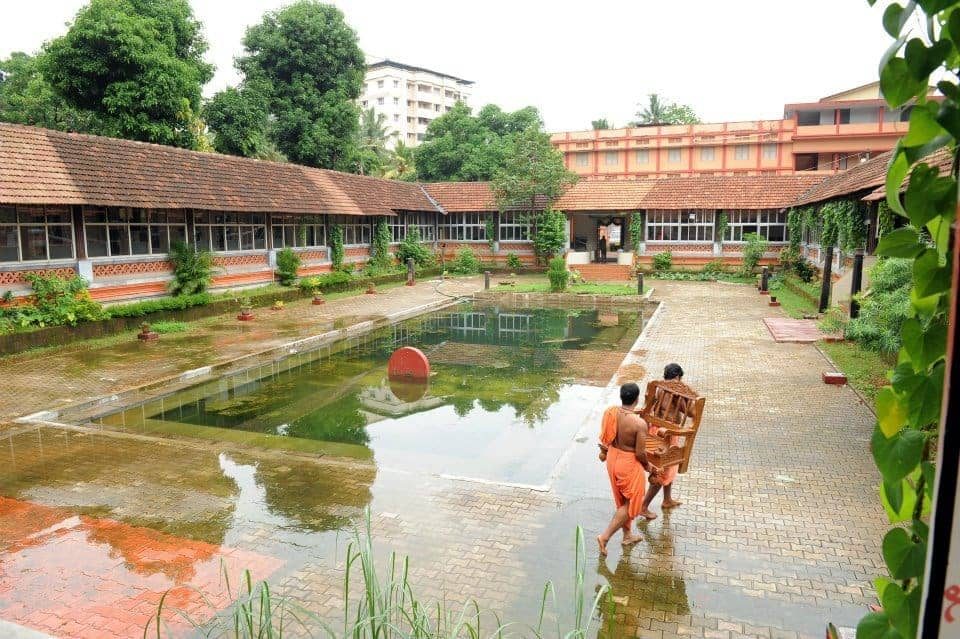
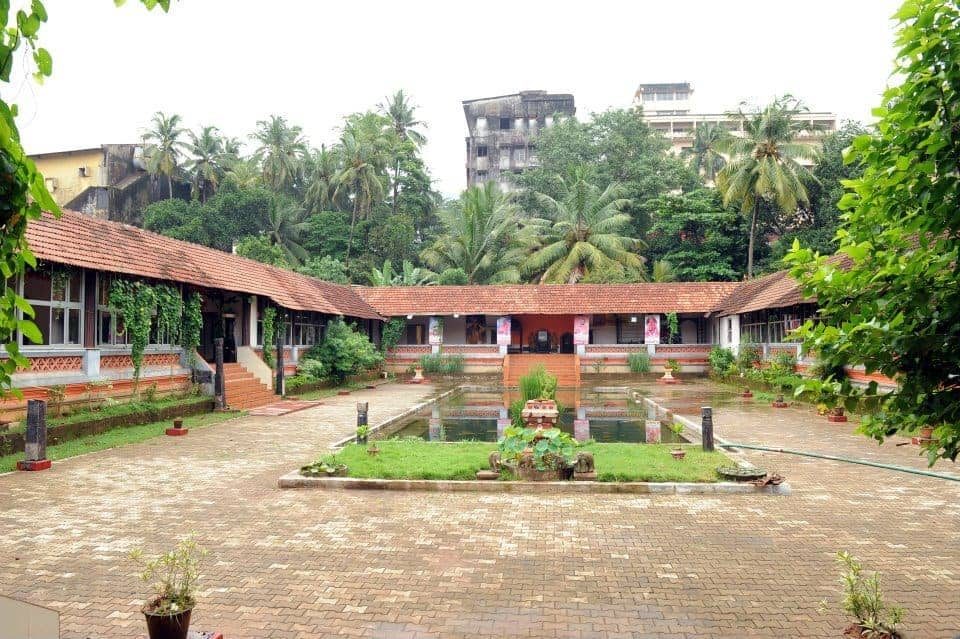
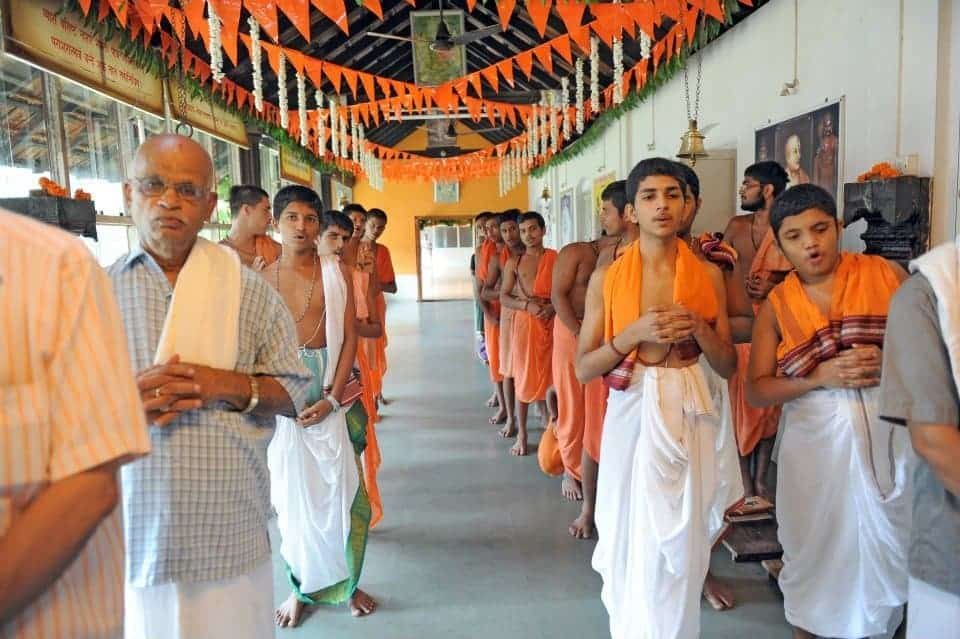
About the Pathashala
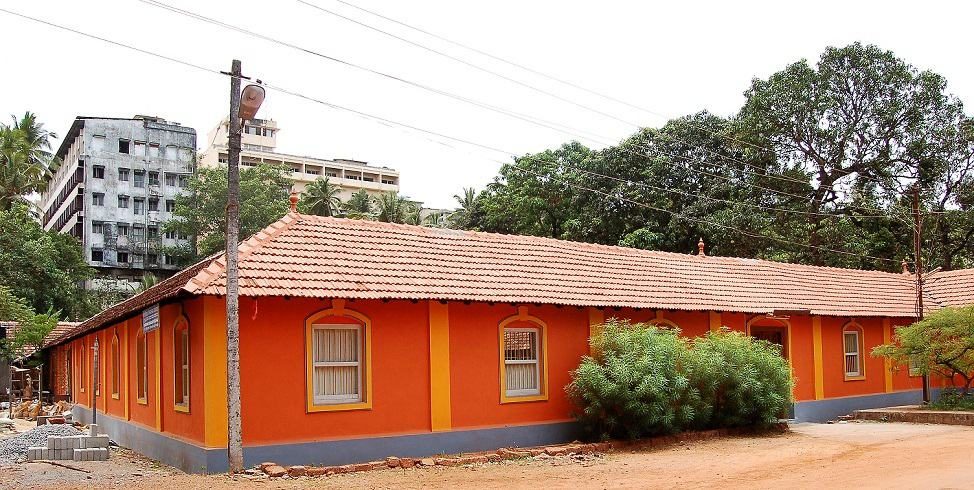
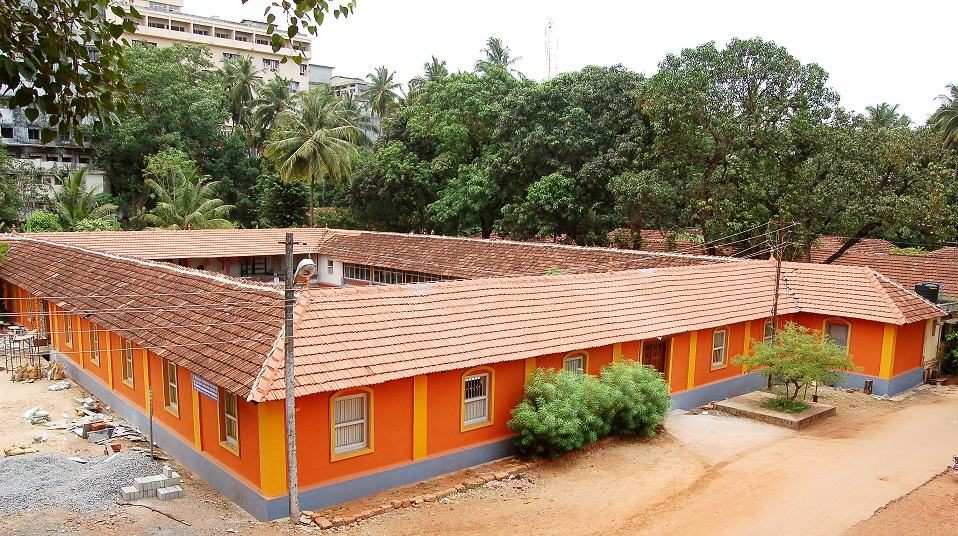
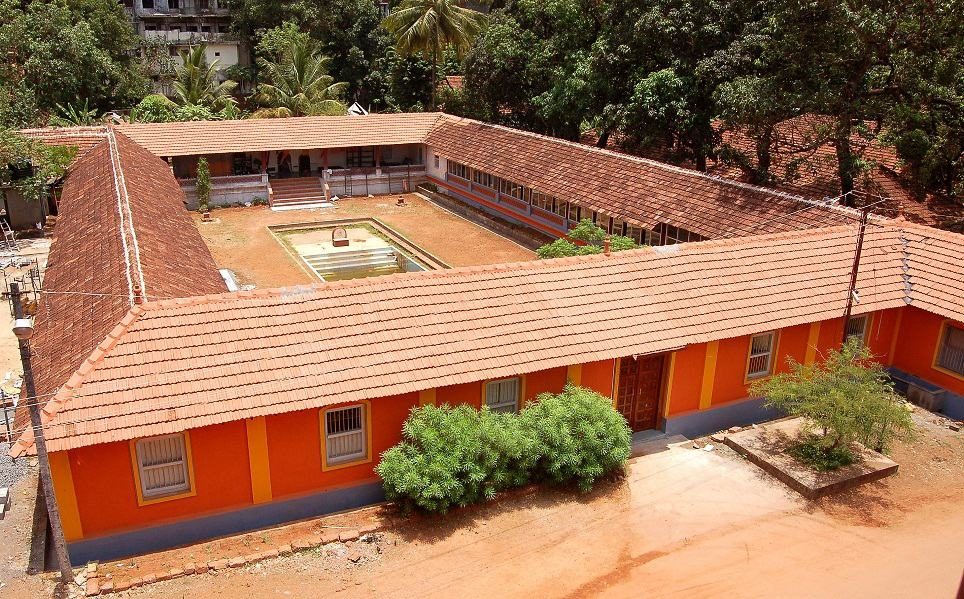
Shri Srinivasa Nigamagama Pathashala is owned and managed by Shree Kashi Math Samsthan, and is the only institution under the direct supervision of H.H Swamijis that offers a three year course of Vedic education.
It stands in a quiet setting by the Pushkarini of Sri Venkataramana Temple on Car Street, Mangalore, with the Shri Mahamaya, Lord Vithoba, Shri Krishna and Sharavu Mahaganapathi temples around it.
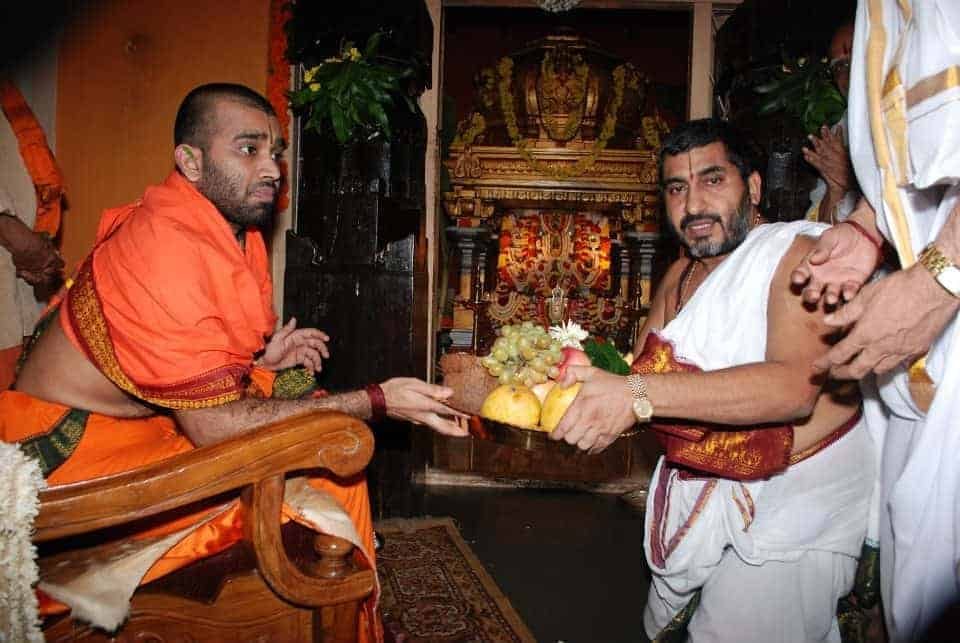
Seeing the growing interest in Vedic learning in the GSB Samaj, H.H Shrimath Sudhindra Thirtha Swamiji took over its administration in 1971. The Pathashala was fully renovated and inaugurated by him on 9 May 2006.
Its Principal has written more than 50 textbooks in the Devanagari script, published as the Granthamala series.
The teachers
Principal · Veda
Teaches the Vedas, learnt by heart with exact pronunciation and intonation (svara), passed from teacher to student by recitation. He has also written more than 50 textbooks for the Pathashala.
Samskrit
Teaches the Sanskrit language, its grammar and classical literature, so that students understand what they chant.
Karmanga
Teaches the practical side of worship: how poojas, homas and the ceremonies of life are performed correctly.
Jyotishya
Teaches traditional Indian astronomy and astrology, used to work out the calendar and auspicious times for ceremonies.
Along with the regular Adhyapakas, visiting scholars also teach at the Pathashala.
What students learn
Every subject taught at the Pathashala, with a short note on what it is, for anyone new to these texts.
The heart of the course: the oldest scriptures, learnt by heart.
The hymns of the Rigveda, the oldest of the four Vedas. The full text is divided into eight parts called Ashtakas, and students learn all eight.
A collection of Vedic mantras, studied in two parts.
The Veda of the mantras recited during yajnas, the fire rituals.
The philosophical teachings at the end of the Vedas, on God, the soul and the world.
Short sayings by Sage Vedavyasa that sum up the teaching of the Upanishads. Moola means the original text, read without commentary.
Prayers and texts chanted every day in worship.
Twelve hymns in praise of Lord Vishnu, composed by Shrimath Madhwacharya.
Lord Krishna's teaching to Arjuna, from the Mahabharata.
Devotional hymns recited in worship.
Hymns of a thousand names of Shri Vishnu, Shri Lakshmi and Shri Vyasa.
A prayer to Lord Vishnu, and the auspicious verses chanted at weddings and other ceremonies.
Hymns in praise of Vayu and Lord Narasimha, with prayers written in prose (Gadya).
Karmanga: how each ceremony is done, step by step.
Daily worship of the deity, at home or in the temple.
The daily prayers offered at sunrise, noon and sunset.
The rites for installing a deity.
The rites performed for a person after death.
Rites performed for peace and to ward off difficulties.
The sixteen ceremonies that mark a life, such as naming, Upanayana and marriage.
Indian astronomy and astrology.
A text on choosing auspicious times (muhurta) for ceremonies.
A classical work by Varahamihira on reading horoscopes.
A text on answering a question through astrology, from the moment it is asked.
The calculations behind the calendar and the positions of the planets.
So that every verse is understood, not only recited.
A Sanskrit thesaurus in verse, learnt by heart to build vocabulary.
Beginner books for reading and grammar.
Two great poems by Kalidasa.
Champu mixes prose and verse; Nataka is drama.
A hundred verses by Bhartrihari on wise and good conduct.
Works of the Madhva tradition, read in the original.
All students are taught Trikala Pooja (worship three times a day), Parva Pooja (worship on festival days) and Havanas (fire rituals), and observe Vyasopasana, the worship of Sage Vedavyasa, every Thursday.
The course
An exam every four months, nine in all, including the annual exams. The first eight are set by the Pathashala's own Adhyapakas.
Conducted by guest Vaidikas from outside the Pathashala.
Successful students receive the title Purohitha Rathna, Purohitha or Archaka, with a certificate signed by H.H Swamiji.
Beyond the classroom
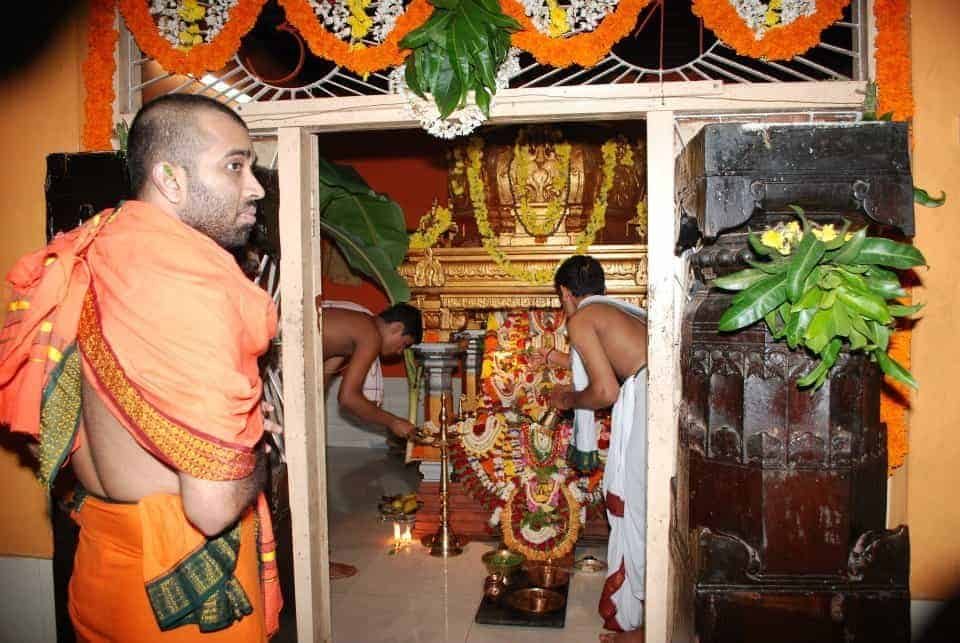
When invited, students chant the Vedas in temples on auspicious days, and perform poojas and Parayana during H.H Swamiji's Chaturmas and on Navaratri. Every year they chant at the holy Vrindavans in Bhatkal, Hemmadi, Basrur, Bantwal, Manjeshwar and other places.
Open to everyone
Anyone who wants to learn Sandhya Vandana or Deva Pooja can join classes here. There are also classes in Sanskrit, bhajans, computers and spoken languages.
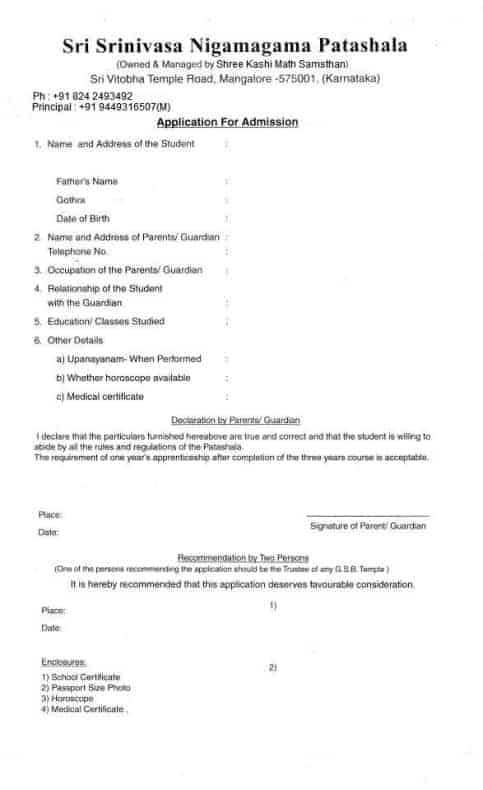
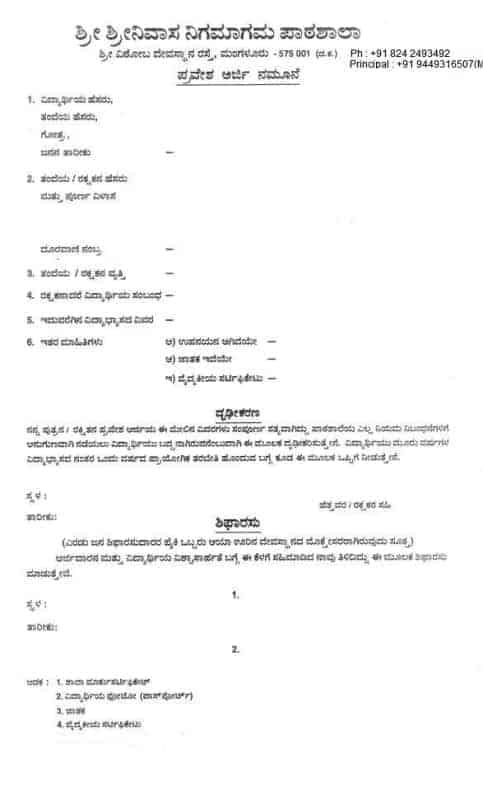
Admissions
Open to GSB students from every state who have completed 7th Standard or equal. Teaching is in Konkani, the mother tongue, and education is free.
Contact
Vidwan Shri Shringeri Sudhakar Bhat
Shri Srinivasa Nigamagama Pathashala
Tank Colony, V.T Road, Mangalore 575001
Devotees can support the students with donations in cash, or by giving items for their daily needs.